
Julien Green’s “South”: A Look Back

Still from "South"

Cultural historians cite Lamont Johnson’s 1972 drama, That Certain Summer, as television’s first foray into gay-themed storytelling. With its high-caliber cast—Hal Holbrook, Martin Sheen, Hope Lange, and young Scott Jacoby—it certainly carried the weight of a landmark moment. And while it does hold the distinction of being the first American production to tackle the subject with such gravity, it was not, in fact, the first time the lens had turned toward such themes. Years before in 1959, Britain’s ITV—as part of its Play-of-the-Week series—presented a television adaptation of Julien Green’s play, Sud (or South, as it came to be known). In the timeline of television history, this is the true pioneer; it was the first drama to quietly, daringly unveil gay-related motifs to a home audience. I stumbled upon a grainy clip of it on YouTube recently, and found myself instantly captured, wanting to know more. Like so many live broadcasts that, in those years, ran once then vanished into the ether, South was considered lost for years. In a wonderful bit of providence, the British Film Institute unearthed and restored it in 2013. Now, it waits available to watch on many media platforms.     
Continue Reading

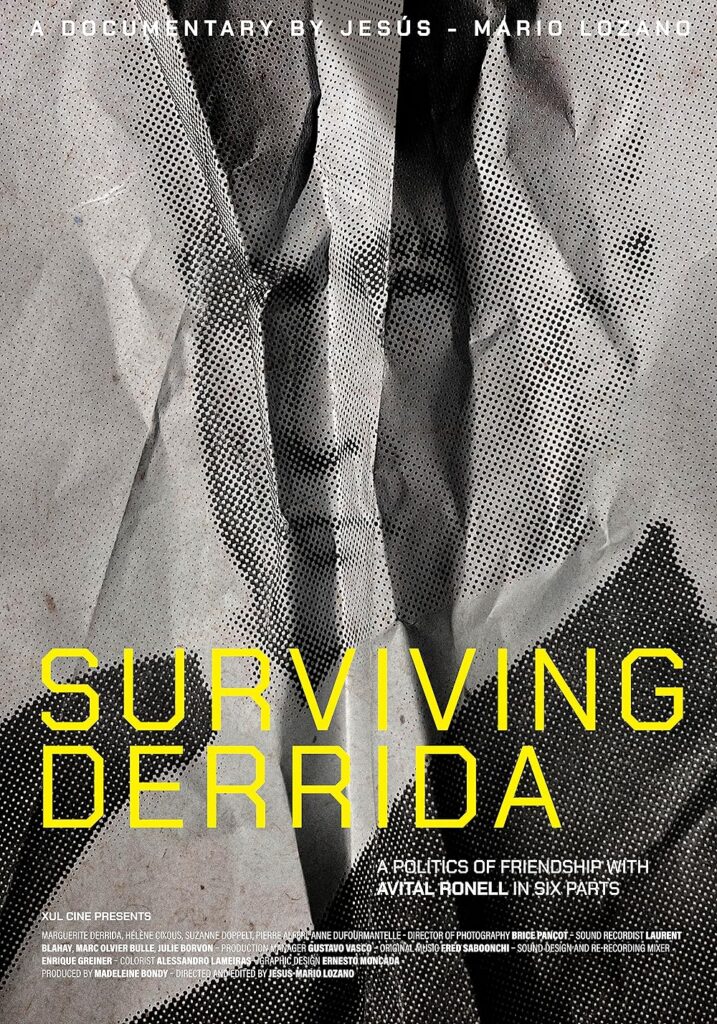
Saving the One You Couldn’t Save: On “Surviving Derrida: A Politics of Friendship with Avital Ronell in Six Parts”

Surviving Derrida

In recollections of her friendship with Kathy Acker, Avital Ronell writes, “Derrida locates in surviving the origin and essence of friendship. Not empirically or chronologically clocked but fundamental, the structure of surviving means that one of you will be left behind, responsible and responsive to the intemporal, irretrievably mute other.” 

Continue Reading

The History of Sound: A Book, A Film, and the Unexpected Twists of Ben Shattuck’s Writing Career

Ben Shattuck

It’s the classic writer’s dream: publish a book, win an award, write the screenplay, and then walk the red carpet at the film version’s premiere. During 2025, Ben Shattuck’s creative life appeared to reflect that dream exactly: his first work of fiction, The History of Sound, won the Mark Twain American Voice in Literature prize and the film version — for which Shattuck wrote the screenplay — debuted at Cannes.

Continue Reading

Bill Kroyer’s Big Shift

Mr. In-Between

Bill Kroyer‘s detailed memoir Mr. In-Between scales the many rocky paths in animation from hand drawn to computer. Hear it from the guy who’s seen it all: a Midwestern animator who shot to Hollywood like a comet and to Disney Studios and abroad, finally landing back in Wisconsin where he serves as Professor Emeritus at Chapman University. An Oscar-nominated Director of films, commercials, and movie titles (including those dear to my heart, Labyrinth and National Lampoon’s Christmas Vacation!), he’s a pioneer in his field. Tron, Ferngully: The Last Rainforest, and Animalympics are just a few of his acclaimed projects. When I quietly asked to interview him he responded, “Sure, I’ll do the show. I’d love to do the show.”

Continue Reading

“Y2K,” “Austin Powers,” and the Art of Retro Comedy

A still image from "Y2K"

The trailer for the new film Y2K gives viewers a pretty good idea of the structure of the film it’s promoting: what begins as a high school comedy abruptly shifts gears into horror — a mash-up of American Pie and Maximum Overdrive, maybe. When I went to the Alamo Drafthouse on Tuesday to watch it, I thought about another point of comparison during much of the film: Attack the Block, another movie that effectively blends comedy, horror, and science fiction. But it wasn’t until Y2K’s climax that I realized that the best point of comparison wasn’t any of these films. Instead, it was Austin Powers: International Man of Mystery.

Continue Reading

Five Books About Filmmaking That Could Be Turned Into Films

Book stack

My new novel, Sleeping With Friends, asks what would happen if memories of film watching were to become the only thing an amnesiac woman has left. And what if the film memories can reveal to her who among her friends has tried to kill her? 

Combining film and the printed word is usually considered an act of crossing the streams. It’s true for the most part—the mediums are vastly different in what they require from language. The novelist struggles to write a raindrop in words. A screenwriter will likely be fired if they get more detailed than “It’s raining.”  Reading is active. Watching is passive. Or is it that simple? 

Continue Reading

If You Enjoyed “Killer of the Flower Moon,” Read “The Deaths of Sybil Bolton” Next

"The Deaths of Sybil Bolton" cover

I spent last Thursday afternoon in a Brooklyn theater watching director and co-writer Martin Scorsese’s adaptation of David Grann’s Killers of the Flower Moon, and I feel comfortable saying that I’m an admirer of film and book alike. But it’s worth pointing out that Grann’s book — terrific as it is — is not the only literary work to deal with the horrific murders that were aptly known at the time as the Reign of Terror.

Continue Reading