
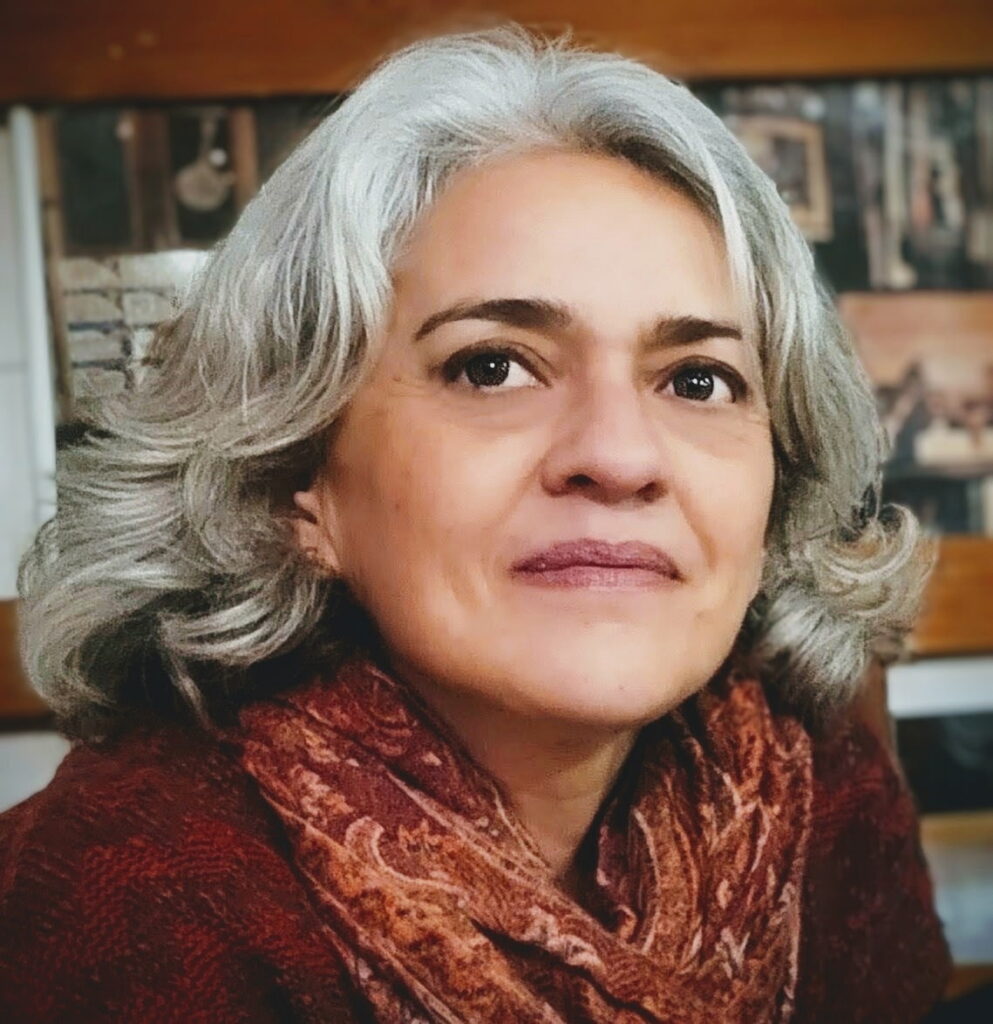
Like her characters, author Diana Rojas certainly doesn’t take the easy route toward closure or redemption. In her latest novel They Hold Grudges she writes from the perspective of Roberto, someone who refuses to “stir the pot” – even when his own reputation is being cooked.
In They Hold Grudges, Roberto is beloved by his Uncle Pablo. In equal measure, he is despised by Mara, Uncle Pablo’s wife, and “Pablito,” his son. When Pablito accuses Rob of an especially heinous crime, Rob’s response is to maintain the peace of an already tumultuous family unit, no matter if that faux sense of peace comes at his own peril.
Vol. 1 Brooklyn sat down with Diana Rojas to discuss how her latest novel – which is part thriller, part drama, part lesson in self-preservation – came to fruition, and why she chose to write from the perspective of “the falsely accused.”
The Family That Shrugs Together…
Why did you choose to write the book from Rob’s perspective?
I wanted to write from the point of view of somebody who never sees this coming. At one point he likens himself to a deer: “Maybe if I stand still, they’ll forget they were aiming at me.” I really wanted the reader to see his interiority. The action around him is quick, but it’s almost like a slow-mo camera on him standing still. What happens to him, even though it’s grave, is less important than how he digests it all.
I want to ask about whether the events – all of the incidences and coincidences in the novel – were actually kismet. Were they?
Okay. So my real answer is a question: what do you think?
Well, I have opinions about Rob’s family – not just the ones that we know are manipulative, but his mom and sisters. And the ones with the special dreams. I’m just trying to think if they’re necessarily beneficial or harmful elements in Rob’s life, these people, these dreams.
The reason I ask is because, when I was writing it, I wanted to leave that part ambiguous. I wanted the reader to bring their own baggage to the party. My intent as an author was to show that sometimes people who love us and we consider good do manipulate us. But I didn’t want anybody to be a villain. I wanted to make them entirely human. I’m sick of people being so virtuous. I believe most people are good, but even good people have dark thoughts daily.
Rob doesn’t want to stir the pot and he’s his own enemy. He kind of let a lot of things happen.
He’s a big baby. He’s so intent on being part of the whole, which means he’s never wanted to step away and be an individual. He defines himself by his family alliances. Had his wife been accused of such horrific things, she would’ve said, “Take that back. She’s a liar.” But he bought into this idea that to be a loving family, you cannot have any conflict. That’s why I open with the example of Aunt Mara always giving him extra-large clothing because she thought he’d held onto his baby fat – and he never corrected her because his mother said, “Don’t stir the pot.”
Did you sit down with the intention of Rob being blamed for the sexual assault?
Absolutely. I went in with, “Here’s a guy who’s going to be accused of something he did not do.” I wanted it to be something that never “comes off.” Sexual abuse is one of those things. Nobody forgives child sexual molesters – even the falsely accused. I wanted to go through the exercise of, “What if that person really was innocent? What would this mean to their life?” For instance, I’m obsessed with the McMartin preschool case. Everybody was acquitted, but it didn’t matter. School closed. Their name was mud. I met a woman from Manhattan Beach who’d gone to that preschool. She said people had “I believe the children” bumper stickers, and if you didn’t have one, people wondered about you. It became a Salem witch trial.
Your book handled this similar situation well. In the microcosm of friends and family, they don’t secretly believe it – they say, “Between us, we know none of this is true.” But Rob won’t push them to speak up.
The entire family tells him, “We all know Mara and Pablito are crazy, just ignore them.” Then we start wondering, how much did we enable these things? Mara is deliberately unlikeable because we always need a scapegoat. When I paint Pablito as a mess, I paint his sister Shirley as perfect – she’s going to Brown, she’s nice, she’s loving. But she also doesn’t rush to Rob’s defense.
Does Uncle Pablo believe the accusations?
I don’t think he believes. He confronts Rob, but he’s dutiful to Mara. Does he believe? I wrote it and I’m still thinking about it.
Do you think Mara believes?
Yes. Mara truly believes because she doesn’t see straight. It explains why Pablito gets no traction in life. He’d be perfect if it weren’t for this thing holding him back.
By the end, I was mad at Rob for taking so long to do anything.
I was mad at Rob too. Despite my best intentions, sometimes my characters say, “No, hold up. Here’s what I’m going to do now.” They’re super disobedient children.
What about the title – They Hold Grudges? Who’s “they”?
They all hold grudges in the family. They pretend they don’t. We think about crowing holding grudges, but in this case the “they” is also humans.
I have to ask about the Kierkegaard quotes for each chapter. What’s the story behind those?
I hyper-focused on Kierkegaard in a college philosophy course. I’d take quotes and scribble them thinking, “That’s how I’m going to live my life.” Rob does the same thing – instead of developing his own philosophy, he depends on his family’s philosophy and on Kierkegaard’s words that he doesn’t really understand. That self-doubt: “Maybe if I was more enlightened, my life would be better.” He does nothing for himself.
I think the story will relate to a lot of people. We all have those family members. But when we have a Rob moment, someone needs to slap us out of it.
Rob was completely unchecked. Crazy is contagious. I didn’t set out to write something debatable – I’m the author and I’m still debating it. But when I decided to let humans be humans, it happened.