
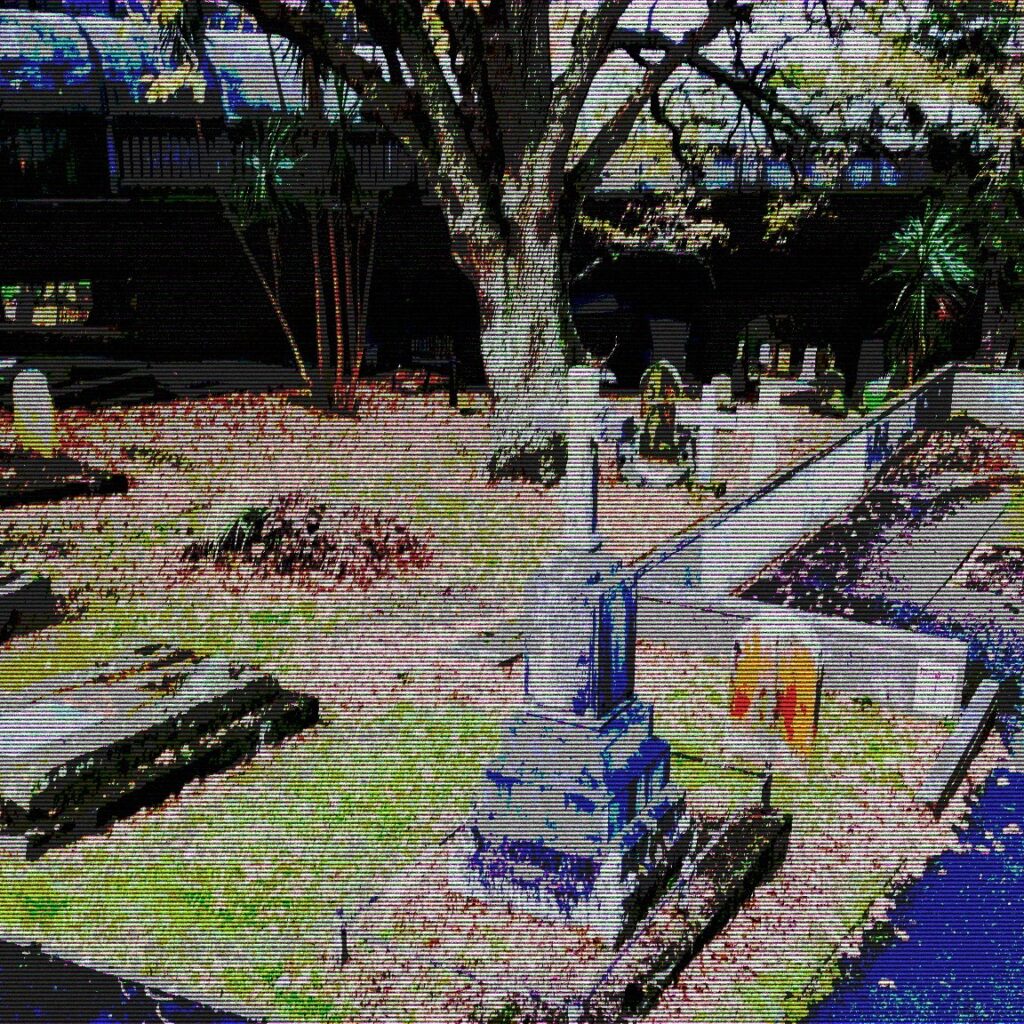
Gravedigger
by X. Luma
Land slopes up from the bay into white cliffs upon which sits a cemetery, so high that silent are the waves beneath the mourning doves’ lamentations, perched at their posts before dawn. It was here that Gunther tended the overgrowth, cleared the flowers long wilted and windblown against forgotten gravestones, and wrenched soil from the stubborn ground to lay bodies to earth. It was here that, one winter morning, Gunther met a procession of boatmen, led by their captain, with one such body in tow.
He ran up to them. “Who is it?”
“Not from here.”
“Washed up.”
“On the shore.”
Sweat broke on the brows of the men and met the tarp-covered body with a pitter-patter. All else was brittle as bone from the morning frost.
“Captain,” called Gunther. “Who is it?”
“In the ground today,” Captain replied from the head of the file, stopping to open the mortuary gate. As Gunther continued toward him with the boatmen, the cover slipped from the head of the corpse. The men looked off and replaced the tarp swiftly, but Gunther had seen the boy’s face. Captain stopped Gunther outside the gate as the men passed through it.
“You get this thing in the ground by nightfall.” Then he followed the men inside.
Gunther stood before the closed gate, musing on the dead boy as the sun rose to his back. Though the third body to beach on this remote shore in recent days, this was the only one he’d been ordered to bury. What happened to the first body was unclear—discovered after sundown two nights before, it somehow escaped the boatmen’s grasp as they carried it up the rocks toward the road on the southern cliffside. Most of the men blamed their fatigue, and the no-light of the new moon, but some insisted that the body had revived and wrested away by its own will. Whatever occurred, it fell from a great height back into the bay and hadn’t resurfaced. The second body, found in a similar spot the previous afternoon, was brought to this mortuary for cremation.
“They say shipwreck, but there’s still no word of one,” came a voice past the gate.
Gunther raised his eyes to a billow of clove smoke emerging from the shadows there. Agnes, the undertaker, spun a circle as she came into view. She was dressed in all white.
“But no one believes that,” she continued. “Not even Captain.”
“Not even Captain?”
“How could he? The men say the bodies are all children. But Captain says what goes.”
“Never without reason,” said Gunther. “Though why burn one and bury the next?”
“Beyond me—he won’t let me do my job. Captain worked the furnace yesterday, alone.” She rested her head against the gate and poked rings into the air with her cigarette. “I only know what I heard.”
Gunther pushed at the soil with his boot and leaned toward her. She shifted left into his shadow to block the sun from her eyes.
“I stayed to listen by the door. Nothing unusual at first, just Captain murmuring to himself, but when he engaged the furnace there came other voices alongside his. I heard a voice like a child’s, I heard the barking of a dog, and Captain’s voice raised against them.” She paused. “Then the door began to shake, so I—”
“I saw this one,” said Gunther. “When they carried him up the walk.”
Agnes cocked her head. Her nose began to drip unbeknownst to her. “Well, don’t tell him that. We’re not supposed to see.”
Gunther blushed, stood silent a few moments longer, and then turned toward the graveyard. Agnes reached through the gate and touched his sleeve.
“What did it look like?” she asked. “This one.”
Gunther took her hand but kept his eyes forward. “It looked lonely.”
Agnes withdrew her arm, nodded, and then bid him to be careful as she left him by the gate.
Light bled pink up the sky from a sun still weak in its waking. Gunther wandered past the denominational plots to the cliffside and looked down at the bay from the land’s edge. The water, churning, looked still. Pesky bittercress and deadnettle tangled about underfoot, and Gunther knelt to the weeds and admired the delicacy of their shoots. He ran his fingers through, and then, in a sudden and sweeping motion, ripped a patch from the rocky soil. The smitten earth was so red and raw he tasted blood—this was the spot, Gunther thought, where he would dig a grave for the boy.
He gathered his template and spade, laid down the former, and shaped a profile of perfect angles. Stepping back, he envisioned the extruded shape—a plot in a place of its own, but too close to the cliffside to be wise for a burial. This towering land slowly slipped away from itself, the cliff’s constitution gradually yet progressively challenged by the waters and winds of passing years. Gunther knew this edge would fall—not soon, but one distant day—into the sea and bring the body with it. Though this, he thought he also knew, was the way the boy would want it.
“Where do you want it?” called a boatman from down the yard. He’d the casket in tow upon a cart that vied with the rough terrain as he pulled it.
“Want it?” Gunther called back. “I’ve hardly started.”
The boatman’s eyes shifted between Gunther and the chosen ground as he neared. The man chuckled, pointing to the plot. “That one for you, then?”
Gunther followed his gaze to the ground at their feet. The grave, moments ago a mere outline, was now fully hollowed and prepared for the casket he’d not expected until evening. Gunther raised his hands before him and found his palms and sleeves soiled with dirt from a day’s work. His shovel was cast aside and soiled the same.
The boatman looked sideways at Gunther. “You been working that ground all day,” he said. “It’s evening. Folks are heading home.”
The boatman stepped aside and gestured toward the men filing out of the mortuary and loitering among the trucks in the lot. Gunther tilted his hat toward Agnes, who stood in the lot looking back at him.
“Just leave it,” he said. “Where you’re standing.”
The man hoisted the casket from the cart to the ground and then sauntered back across the yard. Upon reaching the lot, he pulled Captain aside to exchange a few words. Though Gunther couldn’t hear, he sensed the severity in their exchange and the gravity with which Captain bowed to the man in conclusion. Soon they each turned to raise a hand to Gunther and then drove off with the others.
Once the grinding of gravel under tires gave way, Gunther knelt to inspect the casket. He placed his hands on the lid and passed the evening positioned there, tracing the splintered lines of unfinished wood, feeling the pressure at the seams where the lid met the base and the brimming of potential in every blemish, nick, and notch of the wood. The open ground to his rear offered an intimacy of earth that the body seemed to long for. The sun set in less than a moment.
He took up his spade and pried open the casket’s lid. The nails dislodged like stubborn teeth, or a mouth sewn shut, yawning as if to open itself to the infinite. Nestled within was the child from morning, wrapped first in a black shroud and then again in translucent plastic that silvered despite the lightless moon. Gunther slit the one cover with a pocket blade, slit the next, and then pulled the dead boy out and into his arms like the pit of a peach. Hoisting the boy to cradle, Gunther pitied him in his nakedness and gazed upon the freckles beneath his eyes, clustered like sister constellations that drew what the stars drew, twice.
Then he turned toward the plot and loomed over the gape in a moment of lamentation. Once he’d stepped inside, he laid the boy skin-to-soil, centering and straightening the lifeless limbs to perfect the body’s positioning. And perfectly positioned it was, and perfectly postured the hole, with shapes preordained and pre-inscribed in a soil that seemed to swell in suspiration. Gunther tottered upon the shifting ground and then fell to it. The earth that received him was warm and wet in hand, seemingly ready to nourish not one, but two, if Gunther wished it. As the wind slowed, Gunther whispered he wished it, and he reached to close the boy’s eyes before closing his own. Up above, starlight pierced the sky with a light as if from dawn, and it was thus that the boys lay beneath it—two perfect in a plot, swaddled in soil, to share one space, one sleep, and one dream of wetness and wilt.
X. Luma is a Brooklyn-based fiction writer.