
If there’s a “holy grail” for the home gardener, it is the perfect, sun-warmed, vine-ripened tomato. In The Tomato Growers Handbook, Holly Farrell doesn’t just teach you how to grow a fruit; she provides a masterclass in horticultural joy.

If there’s a “holy grail” for the home gardener, it is the perfect, sun-warmed, vine-ripened tomato. In The Tomato Growers Handbook, Holly Farrell doesn’t just teach you how to grow a fruit; she provides a masterclass in horticultural joy.
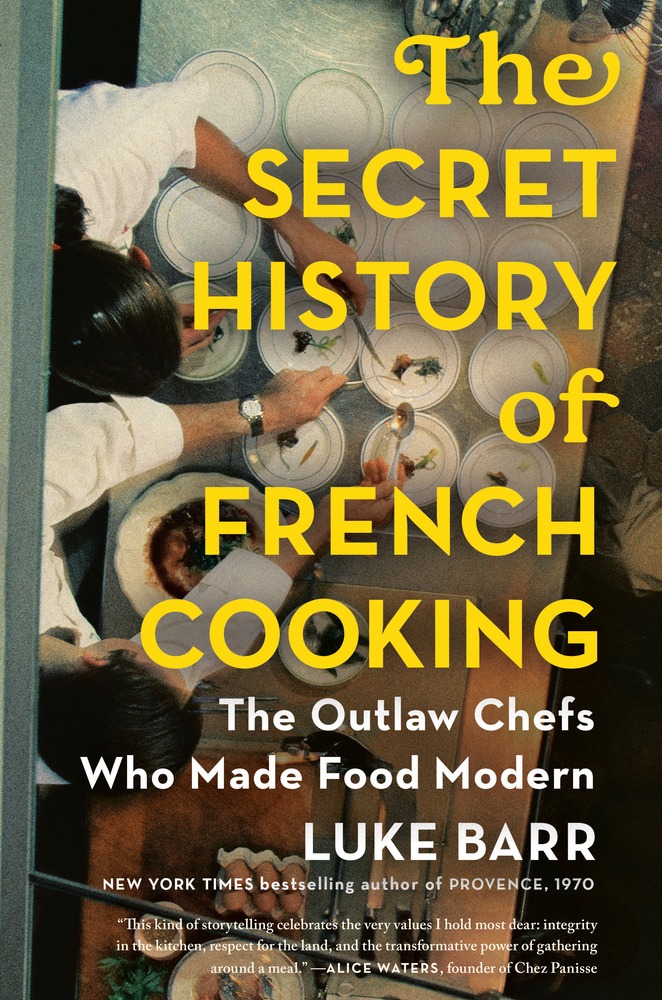
Luke Barr’s The Secret History of French Cooking is an absolute feast—an irresistible blend of culinary archaeology, cultural storytelling, and pure gastronomic joy. Barr has a gift for taking something as familiar as French cuisine and revealing the hidden machinery beneath it: the personalities, the rivalries, the obsessions, and the quiet revolutions that shaped what the world now thinks of as “classic” cooking.

Colm Tóibín has long been a master of the silences that hum beneath the surface of domestic life, and his latest collection, The News from Dublin, finds him operating at the peak of his understated powers. These stories are less about dramatic upheavals and more about the quiet, tectonic shifts in identity, exile, and the persistent weight of the past.

Until earlier this year, the only novel I’d read by the late Todd Grimson was Brand New Cherry Flavor. That book was an absolute headrush, one part bizarre tale of the supernatural, one part cutting Hollywood satire. It was adapted for the small screen a few years ago by Nick Antosca and Lenore Zion; Antosca had long been an advocate for the book, and for Grimson’s work in general. And now there’s a stylish new edition of another one of Grimson’s novels out in the world: Stainless. This is also a story of the uncanny intersecting southern California; it’s also not what you might expect.
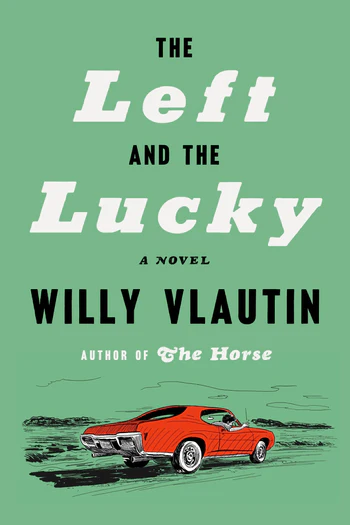
Anytime I crack open a fresh Willy Vlautin novel, I brace myself to flip through a rolodex of misfortune. Most reviews of his work dutifully hit the same set of keywords to describe his worlds: downtrodden, fringe, bleak, down-and-out, hardscrabble, underbelly, endlessly sad—and my favorite, because it’s as spare and straightforward as Vlautin’s own prose: depressing. Vlautin himself once admitted in an interview with Oregon Artswatch, “That’s always been kind of a weakness of mine, making stuff too bleak.”

Weird shit can happen when you’re far from home. To be clear, similar phenomena can also be experienced in your own backyard; still, there’s a long tradition of vacationers and expatriates making bad decisions while overseas. At their best, these stories can memorably evoke different forms of alienation; at their worst, they can play into alarming or nativist tropes.

A report from Washington: Trump, president of the United States, who refers to climate change as a hoax, a scam, has announced that “endangerment finding,” scientific proof issued by the Environmental Protection Agency (EPA) in 2009, is finally being erased by him. This finding shows beyond doubt that greenhouse gases and climate change threaten our health and environment, not to mention the negative impact on other animals (of which we are one of the 8.7 million species on the planet, give or take), animals whose migration patterns, access to food sources, and habitat loss can lead to species extinction. We are living in a futuristic dystopian present.

Alfred Corn, the esteemed poet and man of letters, brings his considerable gifts to Hosts, a radiant collection of short stories. Across ten pieces, his unmistakable poetic sensibility and the immeasurable storehouse of his vocabulary create a word‑lover’s paradise. These contemporary tales—of love, loss, memory, and disappointment—carry an ageless resonance, making them feel both timely and enduring. It is the kind of collection discerning readers have been waiting for.