
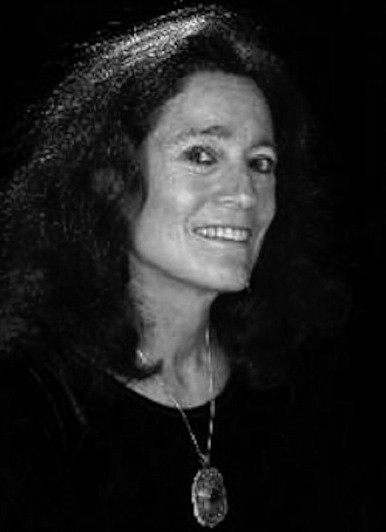
Leora Skolkin-Smith is one of the major and most original female voices of contemporary American literature. Born in Manhattan in 1952, she grew up between New York, and Jerusalem, which led to a split, and sometimes painful, vision of her own identity.
Her first novel, Edges: O Israel, O Palestine (2005), which was selected and published by the acclaimed writer Grace Paley, is focused on a short-lived love story between two runaway teenagers in Israel in 1963, who find shelter in a small village in Jordan. Her second novel, Hystera, (2011) focuses on a young woman’s plunge into trauma and mental illness, and on her observations while committed in a psychiatric hospital. Her third and last novel, Stealing Faith, (2024) depicts the struggles and frustrations of becoming a woman writer in an sexist and competitive academic milieu in the 1960s.
Leora Skolkin-Smith’s style could be described as a mixture of Paul Bowles’s for its distant and merciless precision, and Anais Nin’s for its raw sensuality and intelligence. It’s a unique and powerful voice, that you cannot forget once you’ve encountered it. It has an amplitude and a palette that is unique in its strength and subtlety, familiar and alien at the same time.
She has won several awards, including the USA Book Award and the Global E-Books Award for Hystera. Edges was nominated for the PEN/Faulkner Award and the PEN/Hemingway Award. She has also worked in educational and social-justice settings, developing writing programs for psychiatric patients and homeless women and co-founding a multicultural educational initiative in Brooklyn.
Dear Leora Skolkin-Smith, thank you for accepting to be part of this interview. To begin with, I will ask you the most conventional questions: what is your background and how did you realize that you were a writer?
My father was a theatrical attorney and producer. My father represented Samuel Beckett and was one of the first supporters of Waiting for Godot, helping getting Beckett’s work to a wide audience. He came into my bedroom repeatedly as a child to talk about how a writer expresses the complexities and nuances in Beckett’s work, how a writer can explore the depths of existence and still have their work on a Broadway stage and in a bookstore. I was tantalized and then hooked. I was only eleven but these talks with my father just inspired me to write countless mini autobiographies and somehow fostered the belief that my minor existence was worthy of a Broadway play and best selling book! What’s more, my father loved Proust and came into my room to talk about how this recluse and mentally ill man could create beautiful sentences and ideas and how he could still be worthy of this life through writing. Having been in a psychiatric hospital and experienced the social stigma of that, I drew on these early memories of emotional victory through writing. Secondly, my mother was born in Jerusalem in a Palestine soon to be converted into an Israel only for Jews and settlers from other countries. The complexity of this, both politically and personally, drew me to writing. Writing was a way I found to express and comprehend the political and personal elements of my existence. I started writing very early, so profoundly confused.
Your novels deal with traumatic aspects of femininity and identity, in a very direct and provocative way. What drove you to write about these themes?
My mother was born in a country where women wore army uniforms and held guns. She was very strong and quite domineering, whereas my father was soft and gentle man. Becoming a woman meant identifying with my mother. I grew up in the 50’s and 60’s before feminism redefined what a woman should be. I also had deep and powerful relationships with other girls. One has to understand how restricted the 50’s and early 60’s were to grasp how a little girl would feel so confused by her deep love for her female friends. The confusion sent me on a quest of sorts.
Your novel The Fragile Mistress (2011), which is an expansion of Edges (2005), takes place in Israel in 1963. Your main character Liana, who is 14, elopes with the slightly older son of an American diplomat, and they find refuge in a small Palestinian village, who protects them from search parties. Your narrative breaks three Western taboos with one stone: mother-daughter relationships, adolescent sexuality and politics. What drove you to write about these themes? How is the current conflict affecting you now?
Thank you so much for these questions because these themes are exactly what drive my work. I am perpetually horrified by the Middle East situation and it was the wonderful Grace Paley who showed me I could write about it directly and personally. Writing was an attempt to come to reality with something beyond the self, a tango with the world and its politics. The personal side is that my family was perpetually facing annihilation, that their lives were not just about the personal matters but about a larger and consuming battle of pure self-preservation. I think American friends and the general audience for fiction do not always understand this tension between the right to simply exist and extreme outside violence aimed at erasing one’s life and rights. Grace helped me find art and literature that more than kept me company in a kind of personal isolation, but that also made war and nationhood as important as anything else in a story. I also became close with Susan Sontag who made me understand that art could disturb and provoke, that it wasn’t just about pleasing an audience and getting good reviews but a different calling: to unleash the desires and experiences that can be in fact hard to read.
Finding Grace is a thinly veiled fictional recounting of your encounter and friendship with Grace Paley, who is a huge figure of American fiction. But it is also a depiction of the dangers and challenge of being an aspiring female writer in a male-dominated world. Do you feel that things have changed for female authors since the 60s and the 70s?
This is an important question! Yes, I do feel things are better for women writers but this also came with a new problem for us. So many books about women and by women misinterpreted what feminism was really about. That is early feminism meant to make room for the unheard and unknown. This is just me but often I feel publishing too often rewards the loudest and most fortunate, and Grace and early feminists didn’t mean that. They wanted those silenced by poverty or other means to have a chance to tell their stories. That did happen and many wonderful women writers got the light they deserved, but I feel it’s also important to say that Grace and others were looking out for those women erased and silenced and not only those privileged. I Stand Here Ironing by Tillie Olsen is an example. Here was a woman who was never heard, who wrote of secrets never heard. I think she more exemplifies what Grace meant. But that’s just me really and Grace! Grace wanted the feminine to preside in literature and reside in literature. And that meant those who really had to fight to be heard at all.
Who was the Grace Paley you knew? Was her friendship important in the way you became a writer? Do you consider her your mentor?
Wow. So much to say about Grace… I will try to give you as honest and deep an answer. In terms of my life as a writer, she was the center and a reason to try it and then a reason to keep doing it. I had a very very difficult mother from a foreign country , Palestine. Everyone assumed this was the same as being from what people call Israel now but it wasn’t. My mother’s family lived in Palestine for generations before Israel. There was a kind of alienation I carried inside me and a serious belief that I could never fit in. Though I was born in America I never really felt American. My mother took me to Jerusalem every three years since I was a baby. This wasn’t the Jerusalem people know about now, but a far more European Jerusalem, mixed with Arab influences and culture. I often felt no one here in the U.S. would ever understand and then Grace came along,
I was a sophomore at Sarah Lawrence when I first took her writing class. I had also suffered a serious hospitalization that I needed desperately to express and explore. In short I was a mess of longings and confusions ordinary Americans didn’t seem to understand. Grace—her bold and beautiful maternity, her open heart just saved during those years at Sarah Lawrence. She helped me to feel and find words that could have more than just a personal resonance. I started reading like crazy under her guidance and found a self and a place in both history and my own insignificant life. She helped me make Jerusalem alive in words that were my own, not through the forced absolutism and chauvinism of my mother and her family, and I suddenly felt in the center of my own world after so much of the confusing and violent political world of my mother and her family imposed on me and that were existential questions too overwhelming to digest as a child. I also suffered from a personal tragedy that was of losing my father to brain damage after a serious car accident I was in with him. How can I answer this question? It was that Grace who let me feel that my own language mattered and could have an impact. So I can’t really answer this question! She was a second mother to me but she was also Grace Paley, which meant language and literature and a whole life of meanings discovered through both. I get very effusive and really inarticulate when I try to talk about Grace. She and I just became so close and I don’t think at all I would have found the courage to write without her influence and love. But that doesn’t even express who and what she meant to me. The Grace I knew was strong very argumentative and contrary as a permanent character trait, mad at this American capitalism but never at anyone — even enemies found a place in her heart. She also made it okay to be exactly who I was and who I was, my memories of Palestine included, and being in a mental hospital after a serious suicide attempt in my twenties. She also helped me being a writer against my insecurities and this loud inner voice telling me what I felt wasn’t important or worthy. I wish everyone had a Grace Paley in their life!
I do think as objectively as I can be that she was one of our most important American writers introducing the concepts of voice and feminine life into a prose at a time when feminism rose and was first created. She taught me that trying to change the world was a very good impulse. I devised writing programs for others in psychiatric hospitals suffering the kind of depression I had. I never would have tried if not for her influence and eventually received cultural and national grants to bring literary ideas and sessions to those who faced incarceration like I had. Grace’s dictum was if you don’t like something in the world then go change it. That always is resonating in my inner ear. She was the Sixties to me, a combative pacifist but also just someone with a heart so large it was incredible to be close to her.
What would you tell a young female writer today, if she asked you for advice about writing?
I think the two main things which are to me equally important is 1. Don’t be afraid of telling your own truth or of that truth to begin with and 2. Try to write in your own voice. Listen for that voice, be patient. Writing only worked for me when I found my own voice and vision and didn’t use ones I knew would be easier to read for others or publishers. The writers I admire sought their own ways to express themselves. Try not to be afraid. This is what I would tell a beginning writer.